The Story Behind This Guide
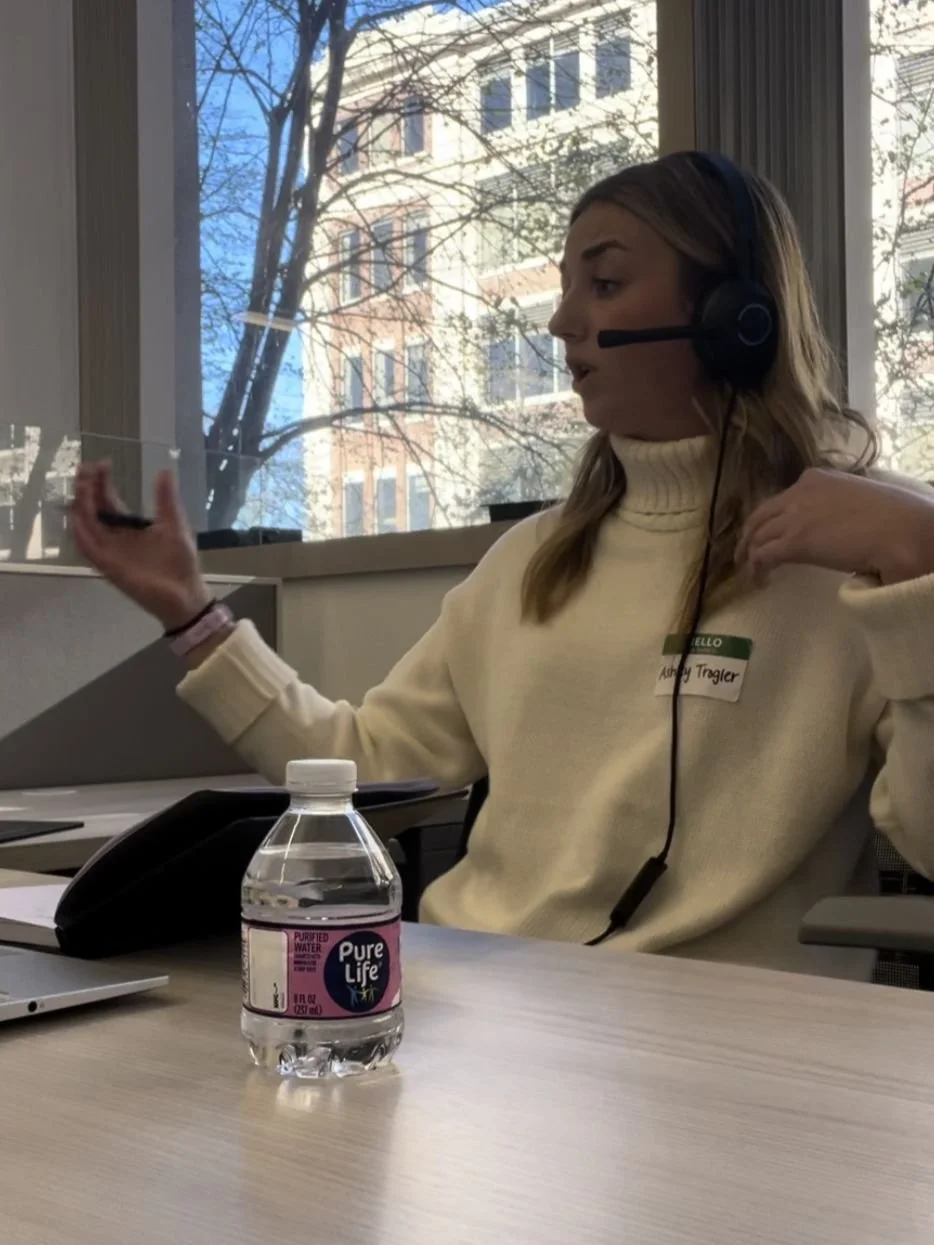
My name is Ashley Trogler, MBA, and I put together this study guide to assist with collegiate sales roleplays. I remember taking my first roleplay and not preforming to my standards because I was unorganized, confused, and completely unaware of what to expect.
For a bit of background, I participated in numerous roleplays ranging from online to in person during my time at Plymouth State University. I was also a member of our Competitive Sales Team and competed in a collegiate sales competition. On top of this, I completed a cold calling internship which got me extremely familiar with the sales process.
This platform is meant to give students the guidance I wish I had when I was first starting my sales journey. This is the way that I was taught, there is no direct right or wrong way of approaching a buyer. Add your own spin to the process, that is what makes it fun!
1. Prospecting
This is the process of finding potential customers who could be interested in what you are selling and deciding if they are a good fit.
-
Before the roleplay starts, try to learn:
What the company does.
Current products/services.
Competitors.
Possible challenges they face.
How your product could help.
* Preparation helps with awkward silence and keeps the flow of the meeting moving *
-
What do you currently use?
What is one thing that you would like to improve on as a business that the current solution isn’t allowing to happen?
What challenges are you currently facing?
What are your goals for this business?
-
I noticed your business has been growing recently, has that created any new challenges for your team?
This is uncovering struggles the business is currently facing and allows the seller to get an understanding if their product would be beneficial for this business or not.
3. Discovery
This is where you would ask questions and learn about the customer’s needs, challenges, and goals before trying to sell anything.
-
Asking close ended questions (yes or no).
Ask open ended questions to get the buyer to talk!
The buyer should be talking more than you.
Following a strict script.
Actively listen to the buyer and pinpoint potential troubled areas.
Sticking to a script may result in missed opportunities.
Forgetting to ask follow up questions.
If a buyer comes out right away and says they strongly dislike their current system, DO NOT ask them what is working well. Dive into why they dislike their system so much.
-
Where do you see your business in the next 5 years?
Follow up: What is holding you back from reaching this goal?
What is working well right now?
What system do you currently use?
Follow up: How well has that been working for your business?
What challenges are you currently facing?
What happens if this problem is not solved?
*These are in no specific order other than the different bullet points showing a follow up question. Each buyer is going to be different, base the order off the buyer.*
-
You mentioned your team has been running into some challenges lately. Can you tell me a little more about what that has been like for you?
This is an example working to uncover challenges for the buyer and also shows active listening.
5. Objection Handling
This is responding to customer concerns or hesitations and helping them feel more confident in their decision.
-
It’s too expensive.
We already use something else.
Now is not a good time.
-
Based off of potential objections:
It’s too expensive
Response: I understand, can you tell me a bit more about what feels too expensive?
This sets the seller up to explain more about the business features.
We already use something else
Response: I totally get that, what do you dislike about what you use now?
If they say they are satisfied, try: I understand, what do you like about your platform then?
This allows you to understand what they like and if your business offers the same features. If the buyer doesn’t currently have benefits from the business they use, this could be an opportunity for your business to take over.
Now is not a good time.
Response: I totally get that, is there a better time in the near future that would work for you?
This shows that you are being respectful of their time but would also like to continue the conversation.
I recommend putting a date on the calendar rather than the buyer just throwing something out there. This helps solidify a future reconnection meeting.
-
Objections can happen at any point, be ready for one right from the start.
Buyers can come on strong, stay calm and do not panic, they are just expressing their concern. It shows they care!
Let them talk, fully listen and do not interrupt them until they are finished. It might feel a little uncomfortable, but it will make the buyer feel heard.
This is where it is vital to be an expert in your field, be ready for any and all objections to be thrown your way!
*ALWAYS ASK THE BUYER IF YOU ALLIVEATED THEIR CONCERN AT THE END OF THE CONVERSATION *
This shows that you care about how the buyer and want to ensure that they have clarity before moving on.
-
Panicking when an objection happens.
Stay calm and always be ready for it, they can a little stressful but with proper preparation you should be ready!
Taking objections personal
It has nothing to do with you; you don’t know what’s happening in their personal life or behind the scenes of their business.
Assuming the buyer is out to get the seller.
Buyers have concerns and are just looking to eliminate some of the stress attached to it. It is not based on the seller.
2. Rapport
This section involves creating a strong first impression and building trust so the customer feels comfortable talking with you.
-
ACTIVE LISTENING
Confidence
Eye contact
Show genuine interest
Make it natural!
* You’re simply having a conversation; buyers will respond better when the conversation feels natural instead of scripted *
-
How has your week been?
How long have you been with the company?
How did you get started in this industry?
Take in your surroundings:
If there is a picture frame: Gorgeous family you have! Got any vacations coming up with them?
Awards: Congratulations on the awards, which one are you most proud of?
* This is your time to connect with the buyer and really learn about them outside of the job. *
-
Be observant!
Look around the potential buyers meeting location and see if there is any decor that can start a casual conversation.
Take key notes to follow up on for the next meeting.
Did they mention any exciting plans coming up?
Are they a sports fan with an important game coming up that can be discussed next meeting?
Uncover as much as you can about the buyer while staying respective of there time, ask 3 solid questions then move on.
4. Presentation
This is where you explain how your product or service can solve the customer’s problem or help them reach their goals.
-
Reading off a script.
This meant to be a conversation, make it unique to the buyer.
Giving too much information at once.
Base the information provided on what the buyer needs, don’t overload with everything your business does.
Talking too much.
You want to describe your business and the features attached, but you don’t want to drag it out to the point where it feels like a boring presentation.
-
Start with highlighting the buyer’s challenge.
Explain how your business would be able to provide a solution.
Dive into benefits that your business would provide for the buyer outside of solving their challenges.
End by reinforcing how it solves the buyer’s problem.
-
Based off of the potential structure:
Based on what you shared earlier, it sounds like this challenge has been creating a lot of frustration for your team.
Our product/service was built specifically to help solve issues like the one you are experiencing.
This could also provide additional benefits that help improve the business overall.
Overall, this solution is meant to help support the needs and challenges you mentioned earlier.
-
You are the expert of your own business; this is where you need to show that.
Connect your explanation to what you uncovered in discovery phase.
Consistently keep the focus on the buyer and the challenges they are facing.
Be selective of the information you share, make sure it would benefit the buyer.
6. Close
Home Stretch! This is when you finalize the sale and get agreement from the customer to move forward.
-
Summarize the outcome of the meeting.
Answer any final questions for the buyer.
Ask if they would like to move forward with a follow-up meeting.
Get their contact information for future contacting!
-
Being afraid to ask for a second meeting.
If the buyer doesn’t want another meeting, they will tell you. The worst thing they can say is no.
Rushing the close.
Although it is the end goal, don’t rush it. Utilize all the time you have with the buyer to complete the sale.
Sounding nervous or unsure.
You are the one in control of the conversation, be confident and direct.
-
Based on what we discussed, do you feel a second meeting would be beneficial for you?
This shows that you think a second meeting would be beneficial, but you also understand that it takes two people. Asking rather than demanding is a great approach.
What’s a good email for you so I can send a summary of today’s meeting as well as a calendar invitation?
This shows you want to stay in touch with the buyer and a genuine care to help their business succeed.
7. Follow-Up
Finally, this is where you check in with the customer after the sale to maintain the relationship, answer questions, and ensure satisfaction.
-
Follow-up emails always!
Just to check-in and ensure everything is working smoothly.
Consistently checking in and continuing communication with the buyer.
Be consistent to build long-term trust.
Always show appreciation for their time.
-
“I just wanted to check in and see how everything is going so far.”
Shows that you genuinely care about them and their success.
“Please feel free to reach out if you have any questions moving forward.”
Keeps the conversation open and makes the buyer feel like they can always reach out to you if needed.
-
Keep your message clear and simple.
Make sure your follow-up has a purpose.
Don’t just reach out because you feel like you have to. Have an end goal as to why you’re reaching out.
Stay organized with timelines to reconnect.
Potential milestones for the buyer’s business, etc.
Remember relationships always continue after the sale.
Good Luck!
My Methodology
This guide is based off of the NCR Primer created by John H. Patterson. He helped standardize the sales process by creating a structured sales manual used by salespeople to guide the conversation with a customer step-by-step. From my experience, sales roleplays at the collegiate level utilize this sales manual to outline and base their curriculum of off.
Utilizing the initial structure that he created, I collected data from 37 of my former classmates, professors, and working professionals via a survey to uncover the struggles behind sales roleplay practice. This uncovered the biggest challenge for students with 73% of individuals, at some point within their roleplay, had uncertainty of what to say next. My guide is here to help these students with specific questions to ask to alleviate the stress of being stuck.
For a bit of background about this guide, all definitions of the 7 stages are defined from online sources while the drop downs are created from independent experiences, the surveyed population, and other outside resources linked below. Some information is based on perceived opinions and independent experiences that may not correlate with all users. This is created specifically to help up and coming college students, as well as current college students taking their first sales course in hopes of eliminating some level of stress when meeting a “buyer” for the first time. The sales process is independent based on the sellers’ personality, their personal approach, and confidence.
I hope you find this as beneficial as I would’ve when I was in your shoes!
Sources